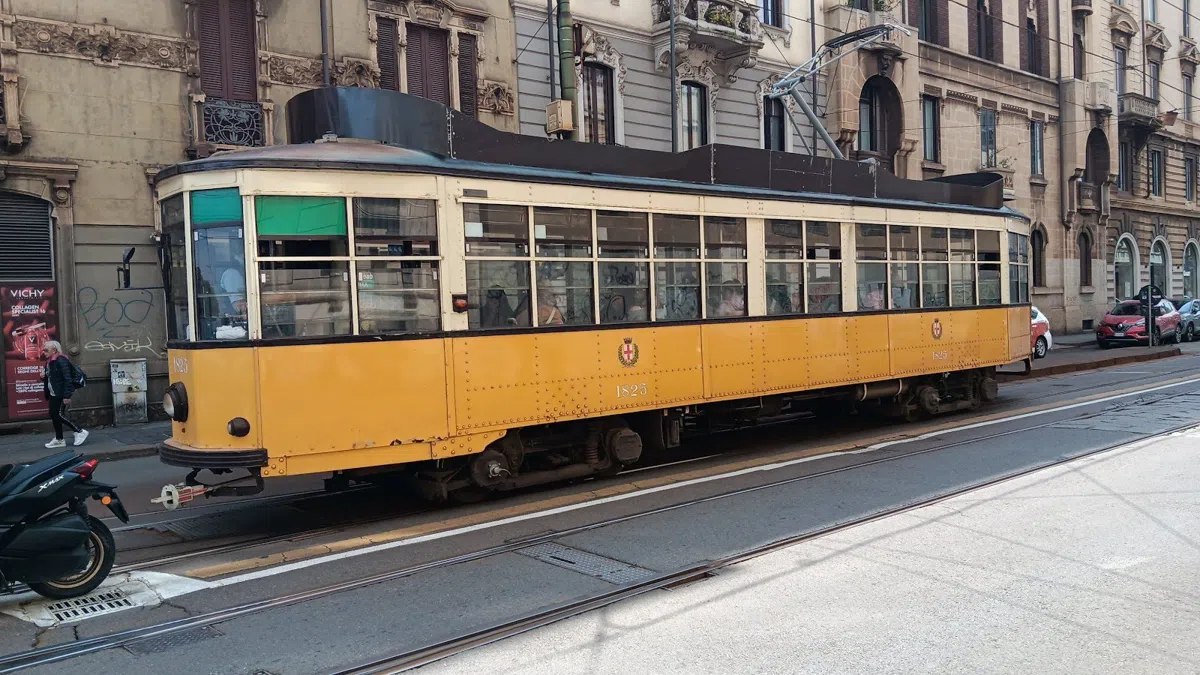

The number 28 is the shortest scenic railway in Europe pretending to be a bus route: nine kilometres of narrow-gauge track, laid when cars didn't fit these streets and still don't, shared today by commuters running late, tourists filming through open windows, and a driver who has heard every camera shutter click a thousand times over. It climbs Graça's spine, threads Alfama's alleys with centimetres to spare on either wing mirror, flattens through Baixa and Chiado, then runs out of road at a cemetery gate in Campo de Ourique. Everyone aboard is riding the same tram for a different reason — and that's the rivalry this piece is actually about: not who gets the window seat, but who the city it passes through actually belongs to.
Graça and the High Ground
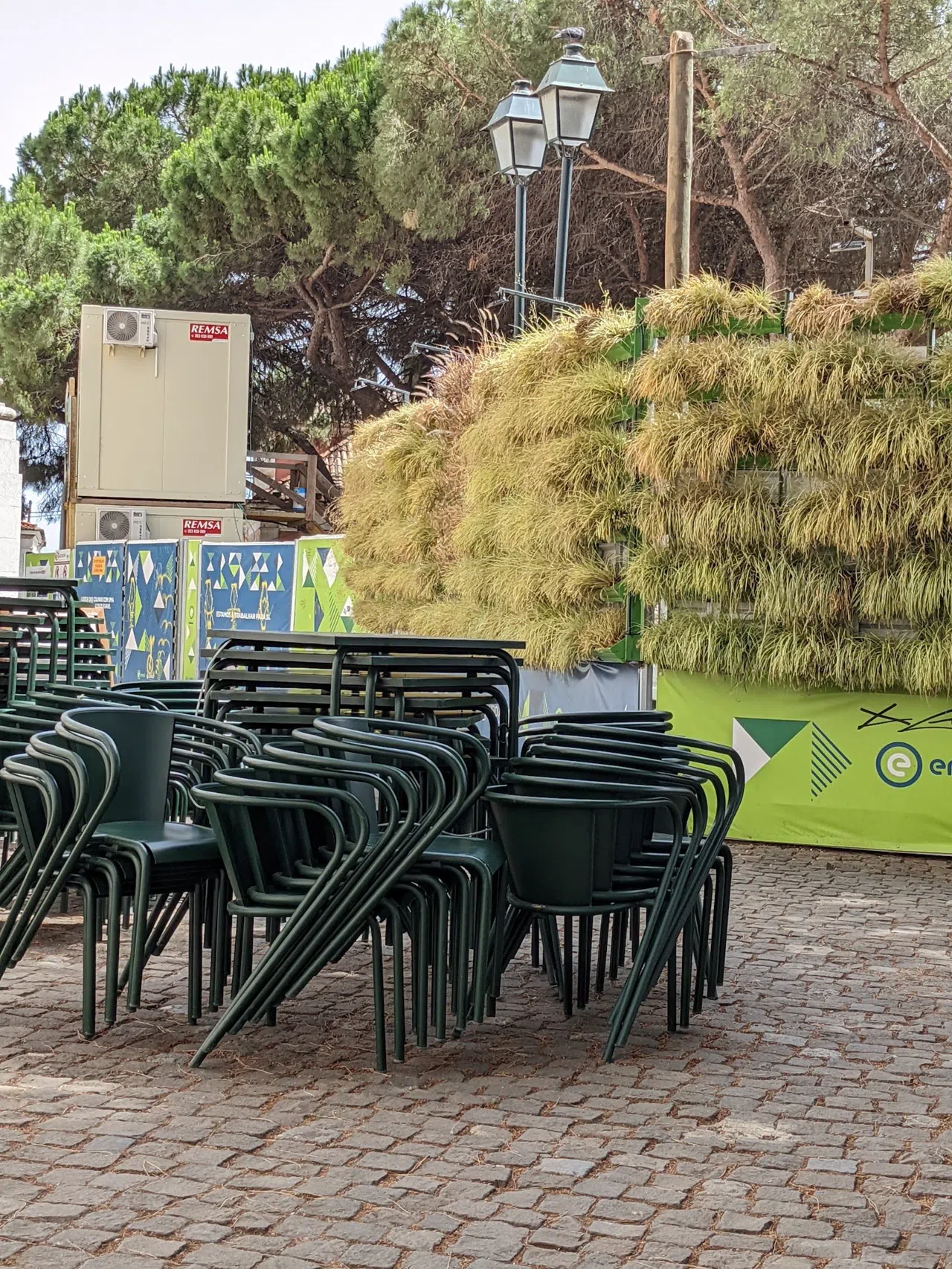
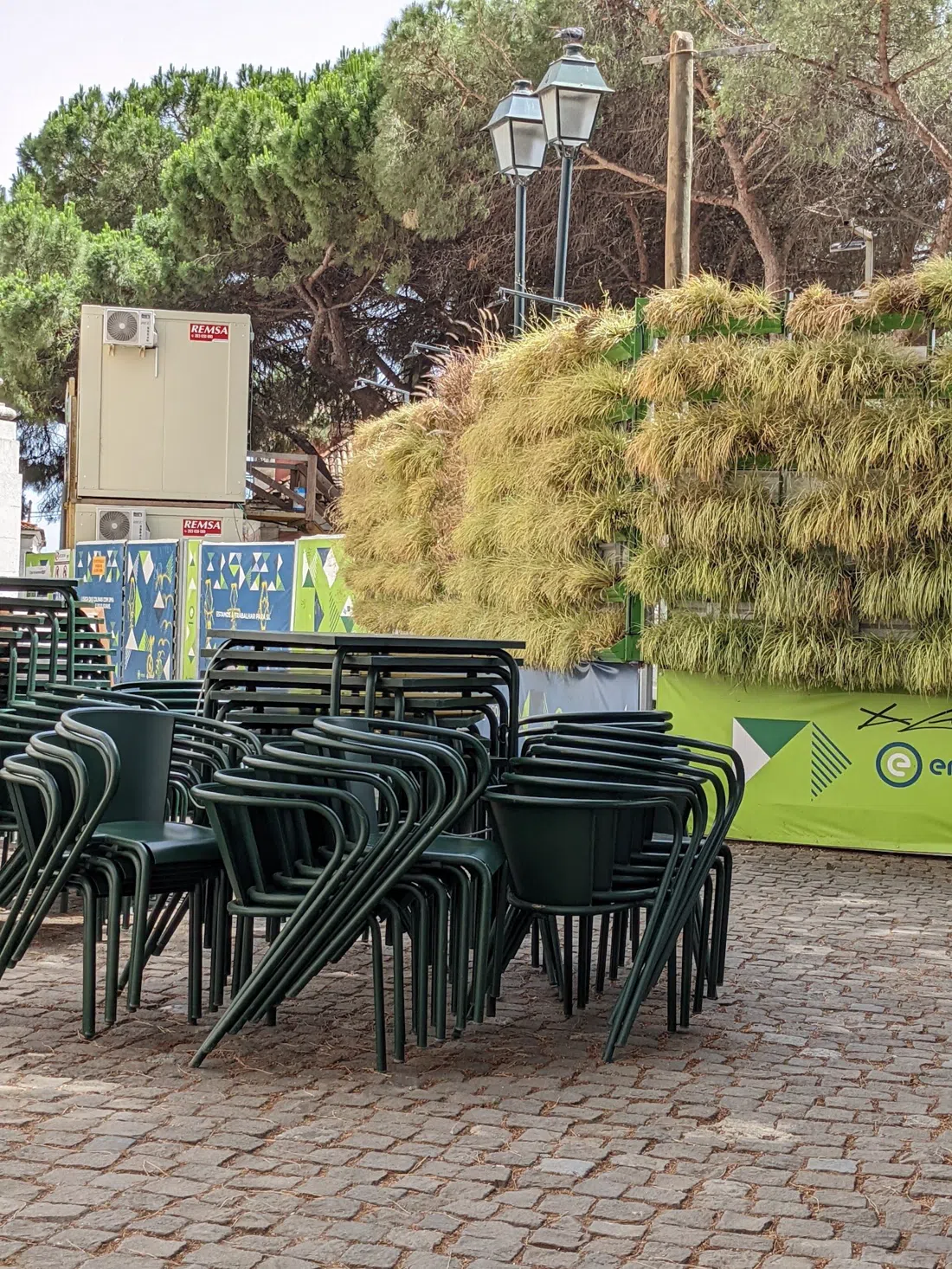
The 28 starts its real climb at Esplanada da Graça (Graça), a wide, unfussy terrace off the Miradouro da Graça — officially Miradouro Sophia de Mello Breyner Andresen — where the line does its first turnaround. This is the spot to understand the whole route before you ride it: order a coffee or a beer (drinks run €2–5) from the kiosk, take one of the plastic chairs, and watch the yellow trams grind up the final gradient and swing round. It's an easy, informal terrace that takes a group of six to ten without anyone standing, which is more than most of the miradouros on this list can say.
Ten minutes' walk downhill, past a stretch where the tram's bell rings almost constantly to clear pedestrians off the tracks, is Mosteiro de São Vicente de Fora (Graça), a working monastery with a rooftop terrace that gets you higher than anywhere on the route except the miradouros themselves. It's ticketed, Tuesday to Sunday, €8, and the group-friendly part is the tile cloister below the roof — the largest baroque azulejo collection in the city, tens of thousands of individual tiles telling out fables and hunting scenes in blue and white. Give it forty minutes if you're doing both the roof and the cloister properly.
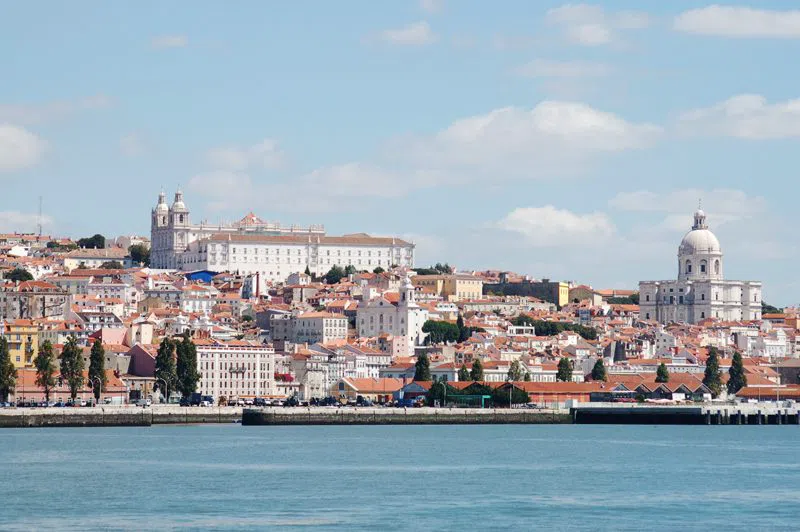
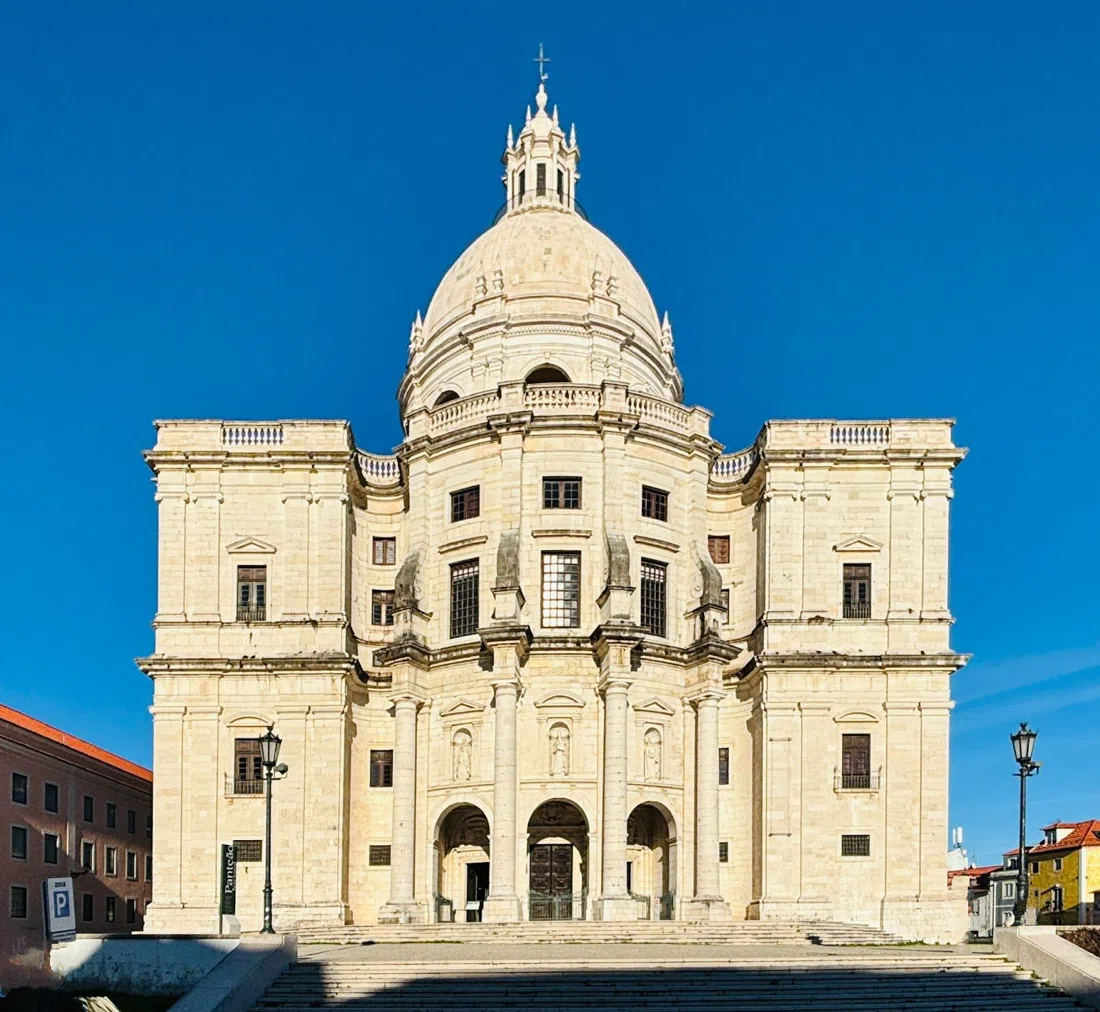
Directly behind São Vicente, the white dome you can already see from the Graça terrace belongs to Panteão Nacional (Santa Engrácia) (Alfama), which spent nearly three centuries as an unfinished building site before it was finally completed and turned into a national mausoleum. It's closed Mondays, €4 (free on the first Sunday of the month), and worth the climb up its own internal galleries for the view over the river and the rooftops the tram has just crawled through — most people photograph the dome from a miradouro without ever going inside it, which is a mistake.
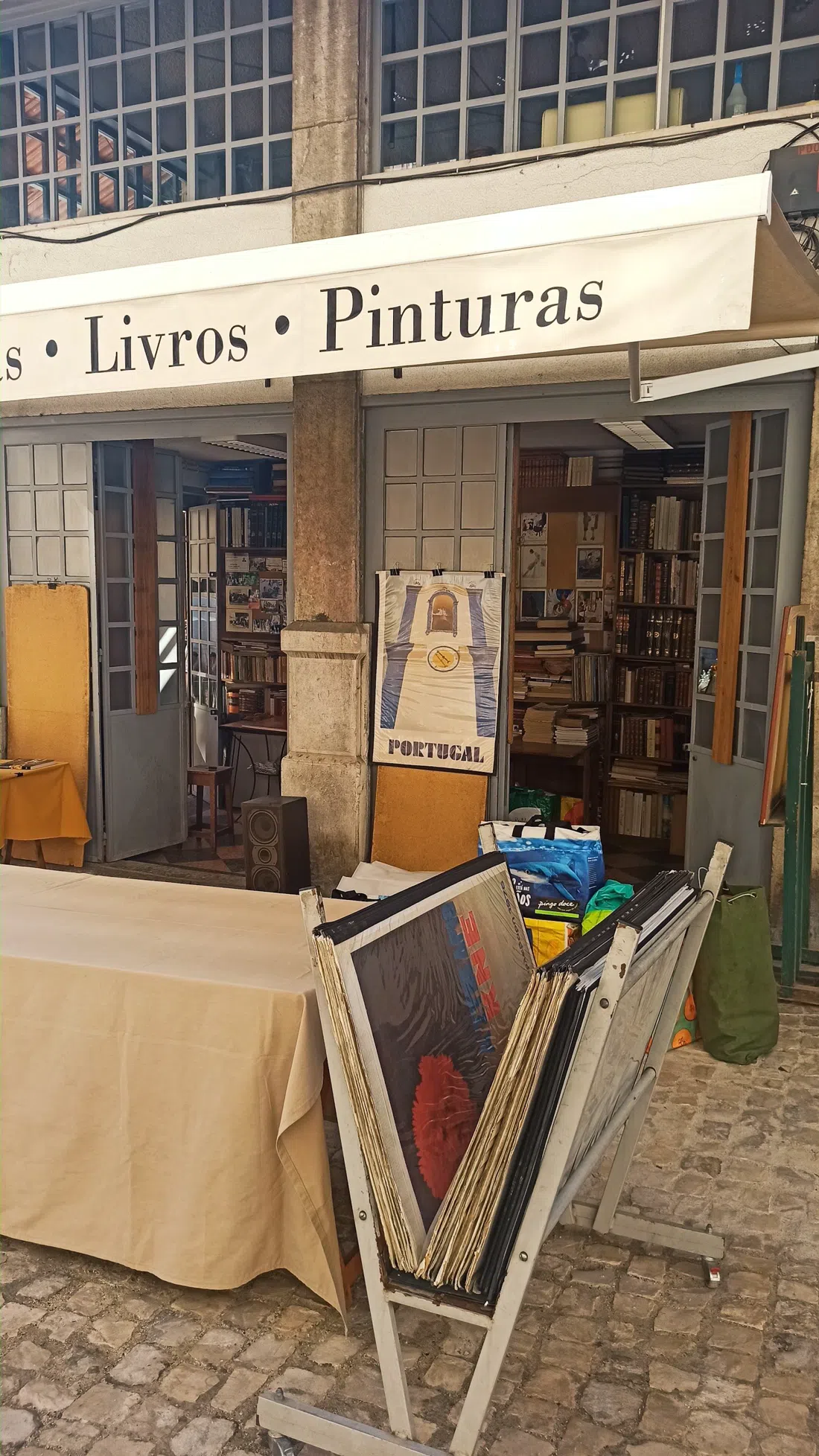
If your timing lines up — Tuesdays and Saturdays only, mornings into early afternoon — the ground between São Vicente and the Panteão fills with Feira da Ladra (Alfama), Lisbon's open-air flea market: furniture, records, old azulejo tiles pulled from demolished buildings, tourist junk, genuine junk. It's cash only, fine for groups who don't mind splitting up to browse, and genuinely not worth planning a special trip for if you're not there on the right day — don't let anyone tell you it runs daily.
Alfama's Narrow Curves
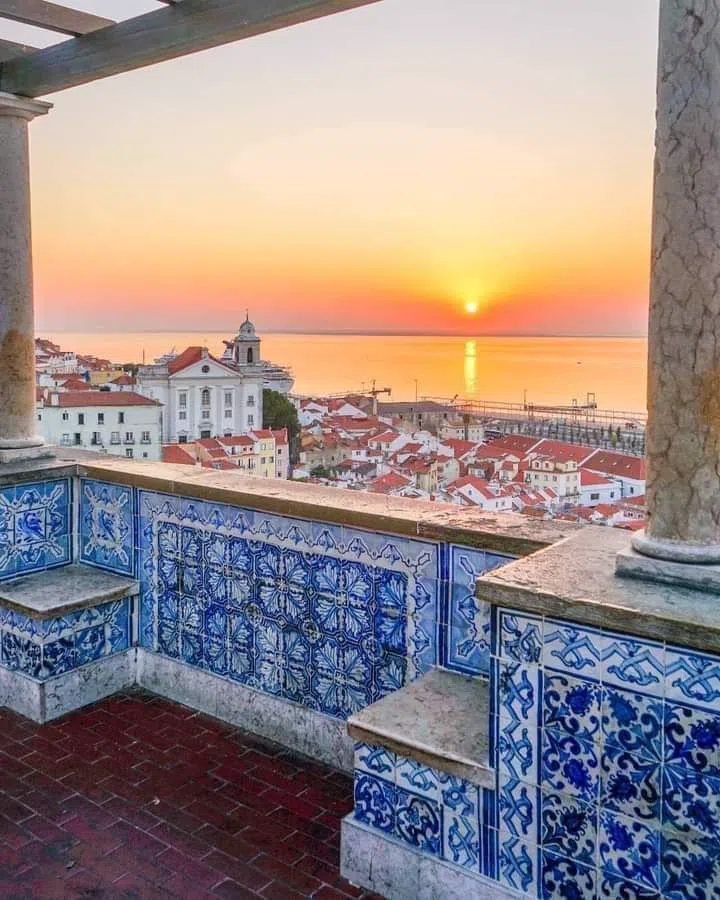
Below the Panteão, the tram tips into the stretch that gives this piece its title: single track, blind corners, wing mirrors that fold in automatically because they'd otherwise clip the walls. The first stop worth making is Miradouro de Santa Luzia (Alfama), a small public terrace hung with bougainvillea and azulejo panels, which is the single most photographed frame of the entire line — tram, terracotta rooftops and river in one shot, which is exactly why it's crowded by mid-morning. Go early, before nine, or at dusk when the light comes in low over the Tejo. It's free, handles groups reasonably, but it is not a place to expect elbow room at noon in July.
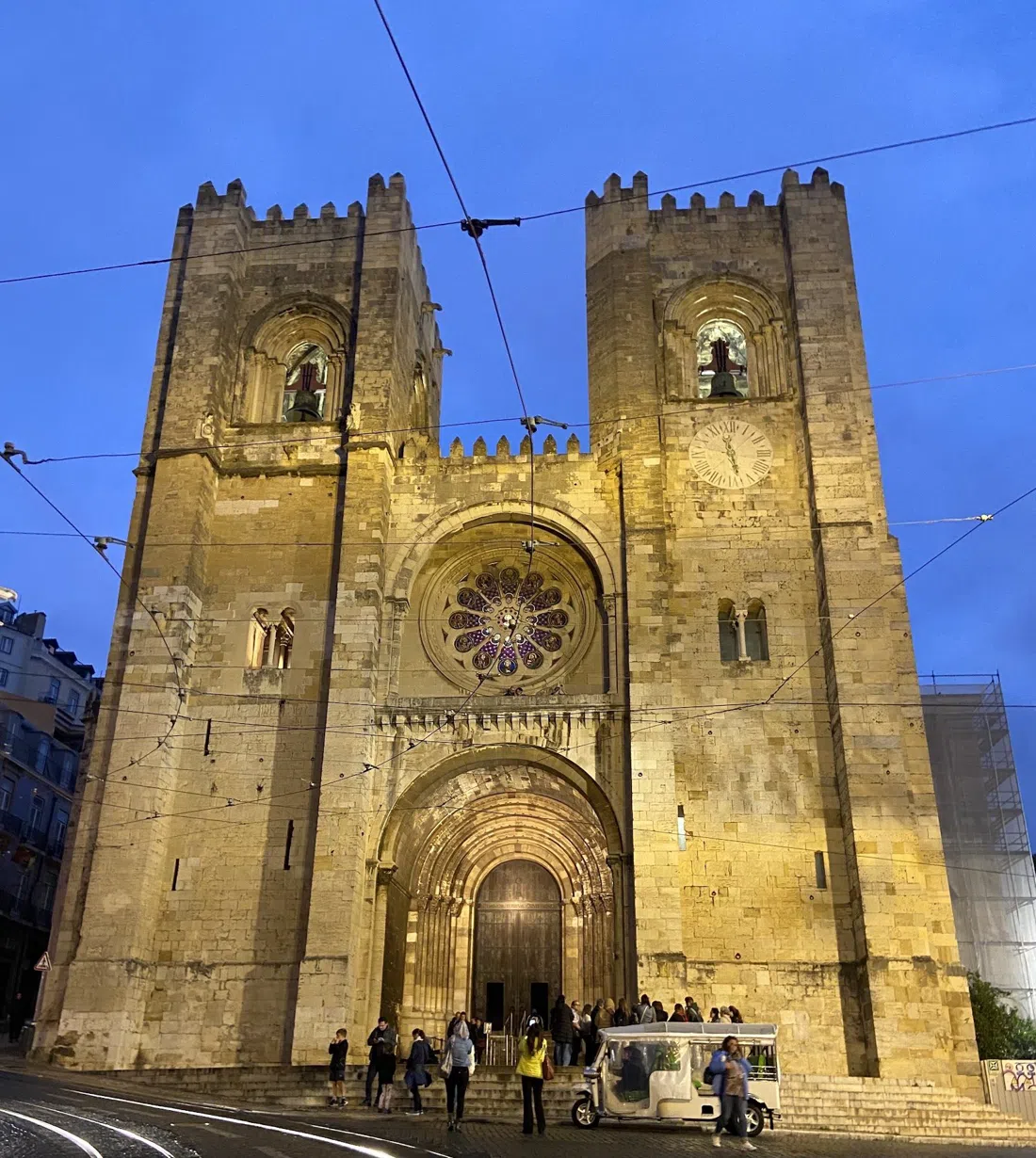
A short, flat walk from there is the Sé de Lisboa (Alfama), Lisbon's cathedral, fortress-plain outside and eight and a half centuries old, sitting so close to the tracks that the trams appear to graze its west wall as they pass — it's the shot every visitor on this route tries to get, cathedral and tram in the same frame. Entry to the church itself is free and takes groups without issue; the cloister, where excavations have turned up Roman and Moorish remains under the flagstones, has a separate €5 ticket and is worth it if you have twenty minutes spare.
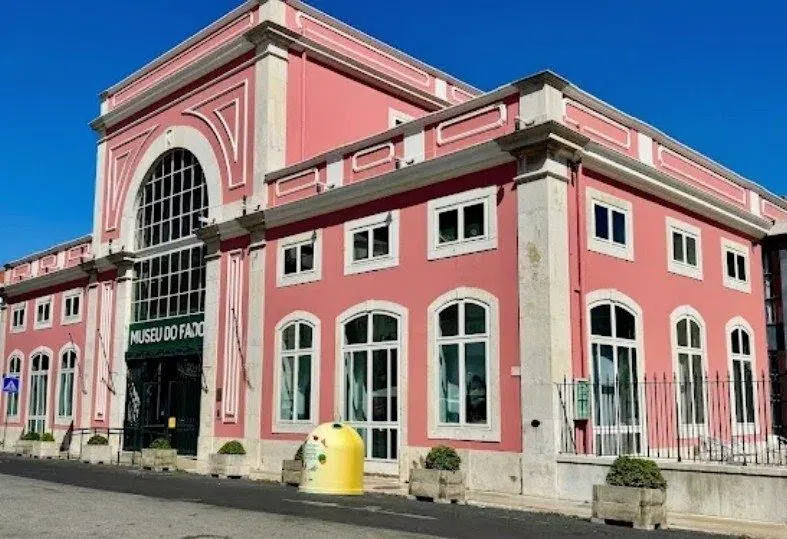
A few doors along, Museu do Fado (Alfama) is the museum that explains what you're hearing drifting out of half the tascas on this hill after dark. Fado — Lisbon's own genre of melancholic, one-voice-and-two-guitars music — was born in exactly this neighbourhood, and the museum (€5, €2.50 concessions, audio guides in several languages, group-friendly) is the difference between hearing it as background noise and understanding why it sounds the way it does. Budget an hour.
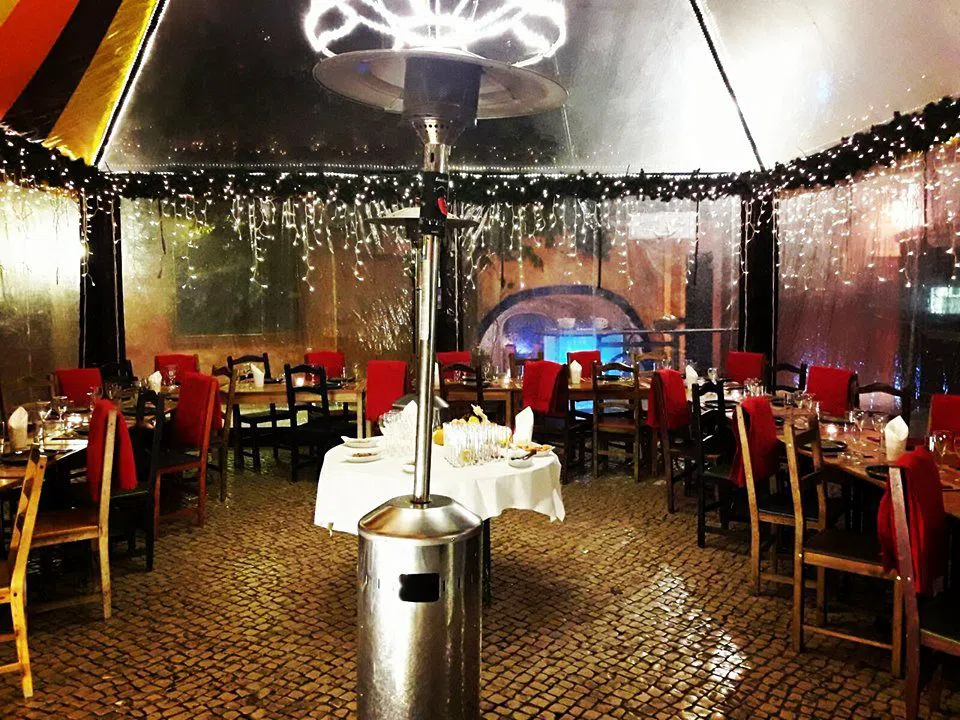
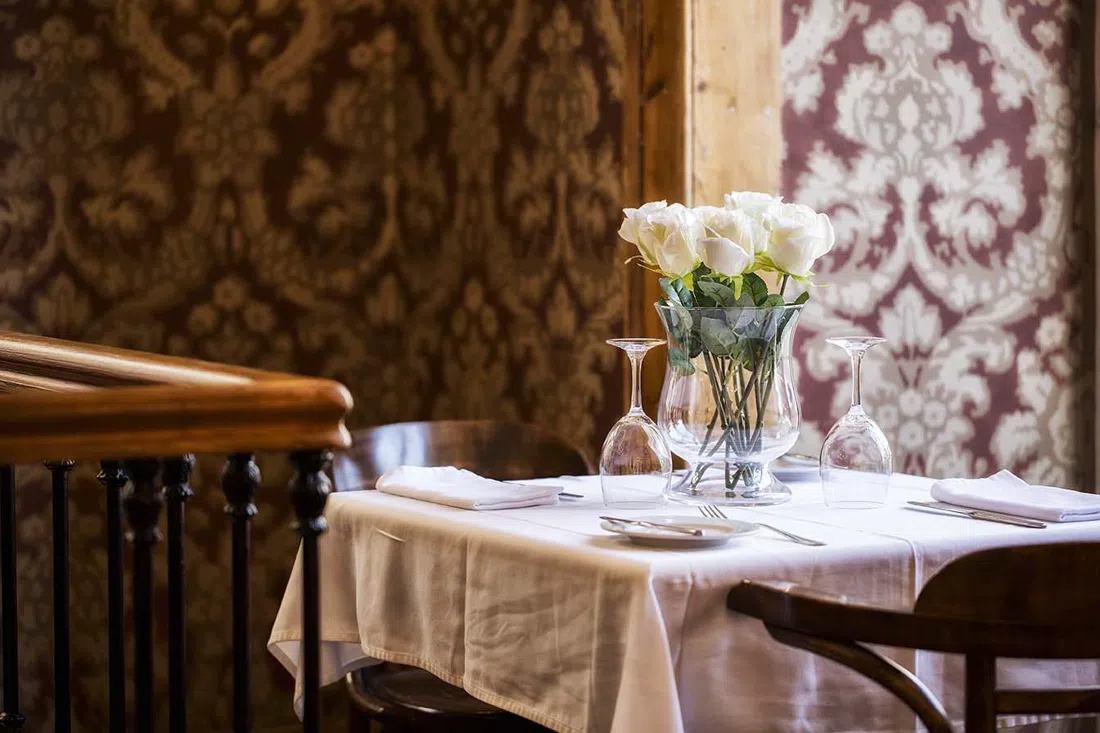
For the best seat to actually watch the rivalry the tram embodies — rather than be part of it — climb up to Chapitô à Mesa (Alfama), a restaurant terrace directly above the steepest, most gridlocked bend on the whole route, just below the Castelo. Reservations are recommended for the terrace tables, it's a €€€ sit-down meal rather than a quick stop, and from up there you can watch a single tram back up traffic for a full city block while everyone below leans out to film it. It's the most expensive item on this list and the one that best explains the title.
Baixa: Where the Climb Ends
The tram flattens out and speeds up through Baixa, the grid rebuilt after the 1755 earthquake, and the obvious stop here is Confeitaria Nacional (Baixa), the city's oldest bakery, open since 1829 — older than the tram line itself. There's a standing counter for a quick pastel de nata and coffee (€1.50–3 a pastry) or proper sit-down café service if you want to rest your legs after the hill; either way it takes groups without fuss and it's a better choice than the generic tourist cafés clustered around it.
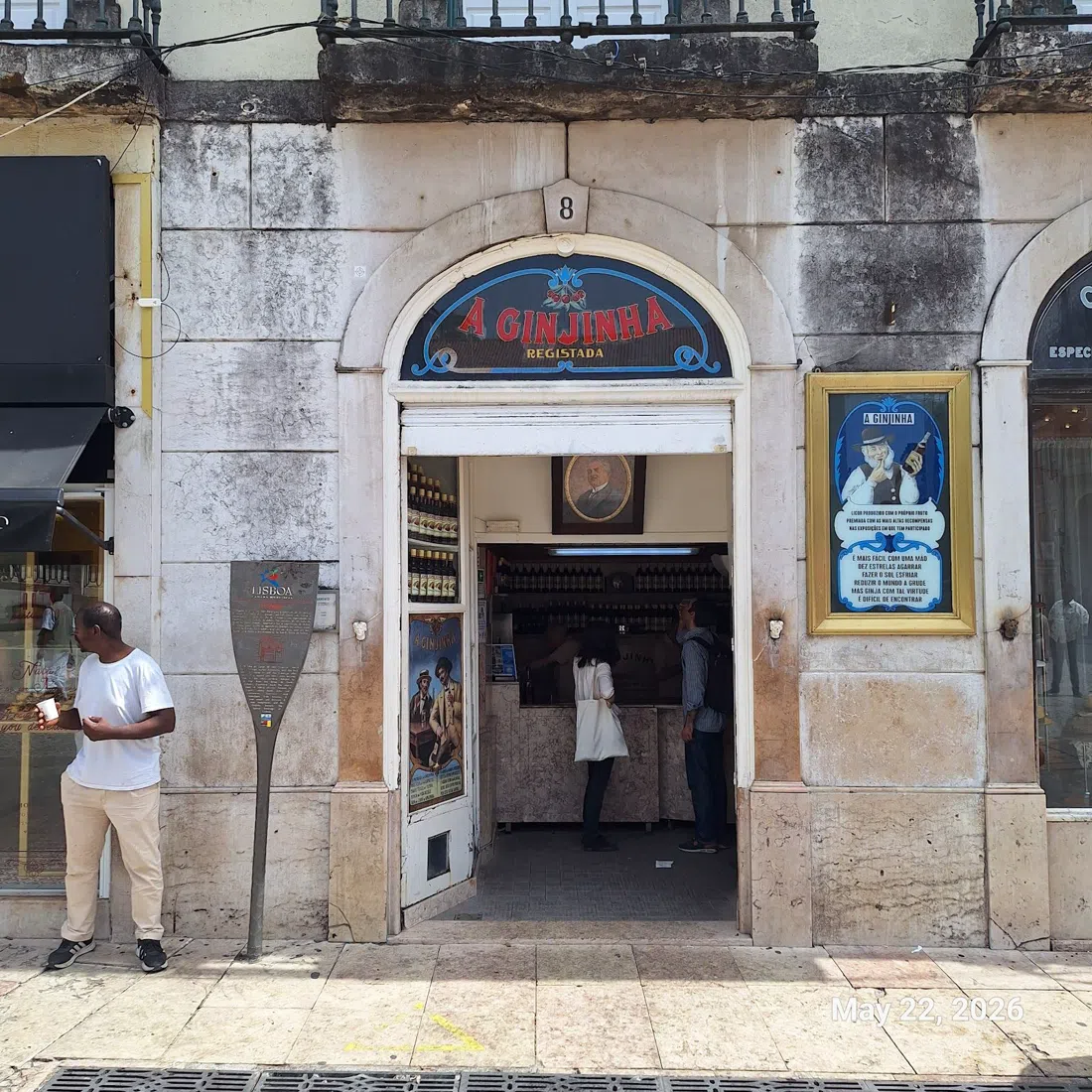
Two minutes off the tracks, through Rossio, is A Ginjinha (Baixa/Largo de São Domingos), a liqueur bar so small there's no seating at all — everyone drinks their shot of sour-cherry liqueur (€1.80–2.20, with or without a cherry in the glass) standing on the pavement outside. It works fine for a group as long as nobody's precious about queuing at a hole-in-the-wall counter, and it's the detour every gridlock joke about the 28 eventually leads back to, because the street it sits on is one of the ones the tram has to fight through to reach Rossio at all.
Chiado, Briefly
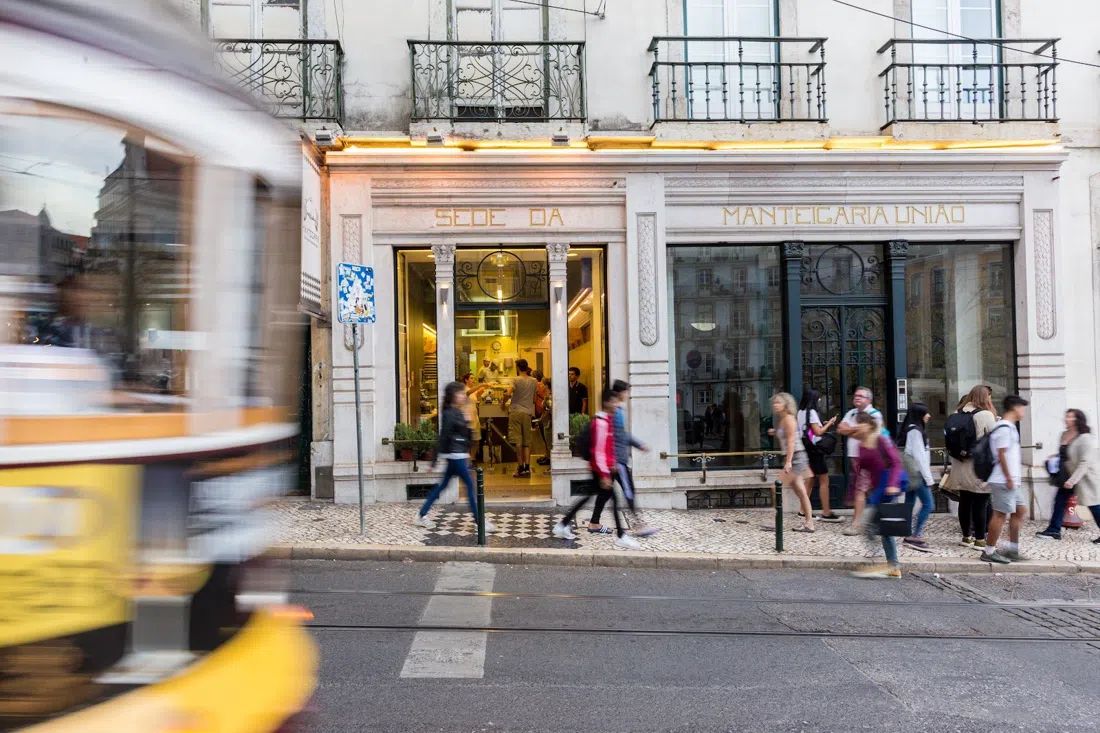
The 28 skirts Chiado rather than running through its centre, but it's worth the five-minute detour uphill for Manteigaria — Chiado (Chiado), a counter-service bakery doing the other good pastel de nata in this city — Belém gets the tourist buses, this gets the locals and the people who've worked out the queue is shorter. Pastries run about €1.50, there's fast turnover rather than seating, and it's an easy stop for a group that doesn't need to sit down.
Estrela: The Quiet Bookend
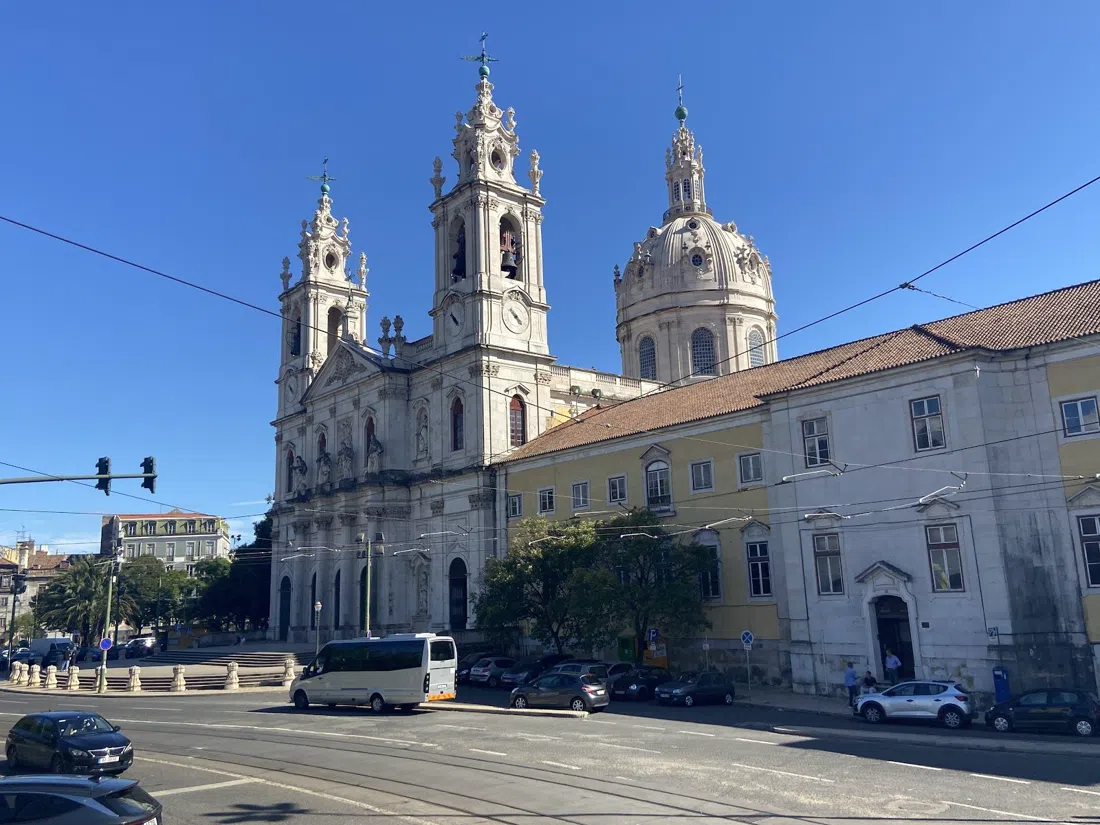
Where Graça and Alfama are all crowds and cathedral stone, Estrela — the western end of the line — is calmer, more residential, and the domed church here gets a fraction of the visitors the Panteão does despite being just as climbable. Basílica da Estrela (Estrela) is free to enter, and its dome climb — one of the only free ones in the city — is open to the public, which most visitors simply don't realise. The stairwell is narrow and single-file, so it suits couples and small pairs better than a group of eight moving together; split up if you're travelling in numbers.
For the sit-down, unhurried version of the ginjinha ritual, Solar do Vinho do Porto (São Bento/Estrela) pours port wine by the glass with proper table service, no reservation needed for small parties, in a wood-panelled room that feels like a private club rather than a bar. It's €€ rather than a €2 shot, but it's the version of "a quick Lisbon drink" that lets you actually sit down and talk, which nowhere in Baixa really offers.
Campo de Ourique and the Cemetery Gate
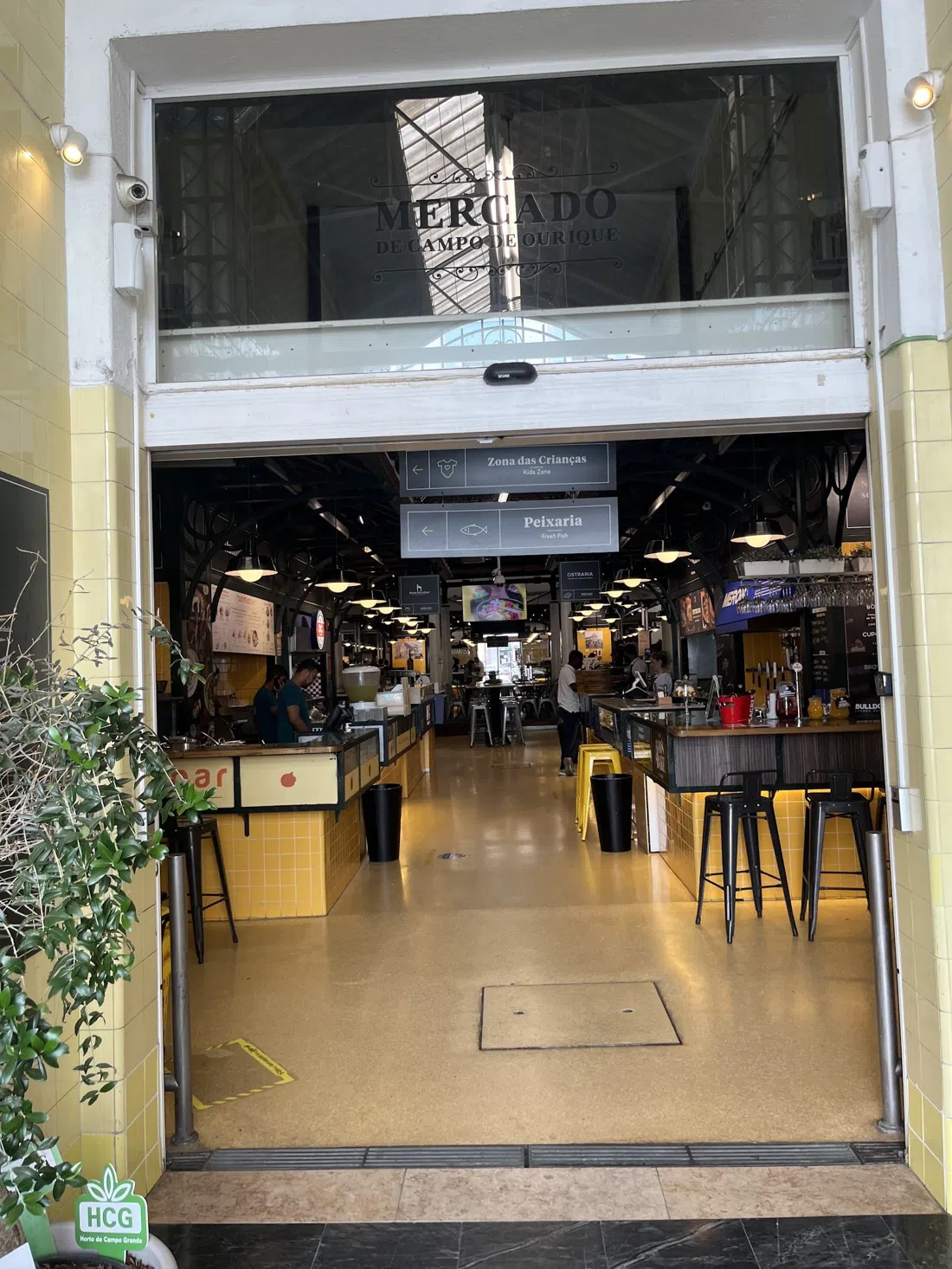
The tram's last stretch runs through Campo de Ourique, a flat, grid-planned district that feels like a different city after the hills — wide pavements, local shops, none of the crowd management logistics of Alfama. Mercado de Campo de Ourique (Campo de Ourique) is the food market to send yourself to once you've finished the ride: communal seating, a dozen counters doing everything from seafood to burgers to natural wine, and it takes groups easily since nobody's trying to hold a single table. It's the natural place to eat once the tram has done its job.
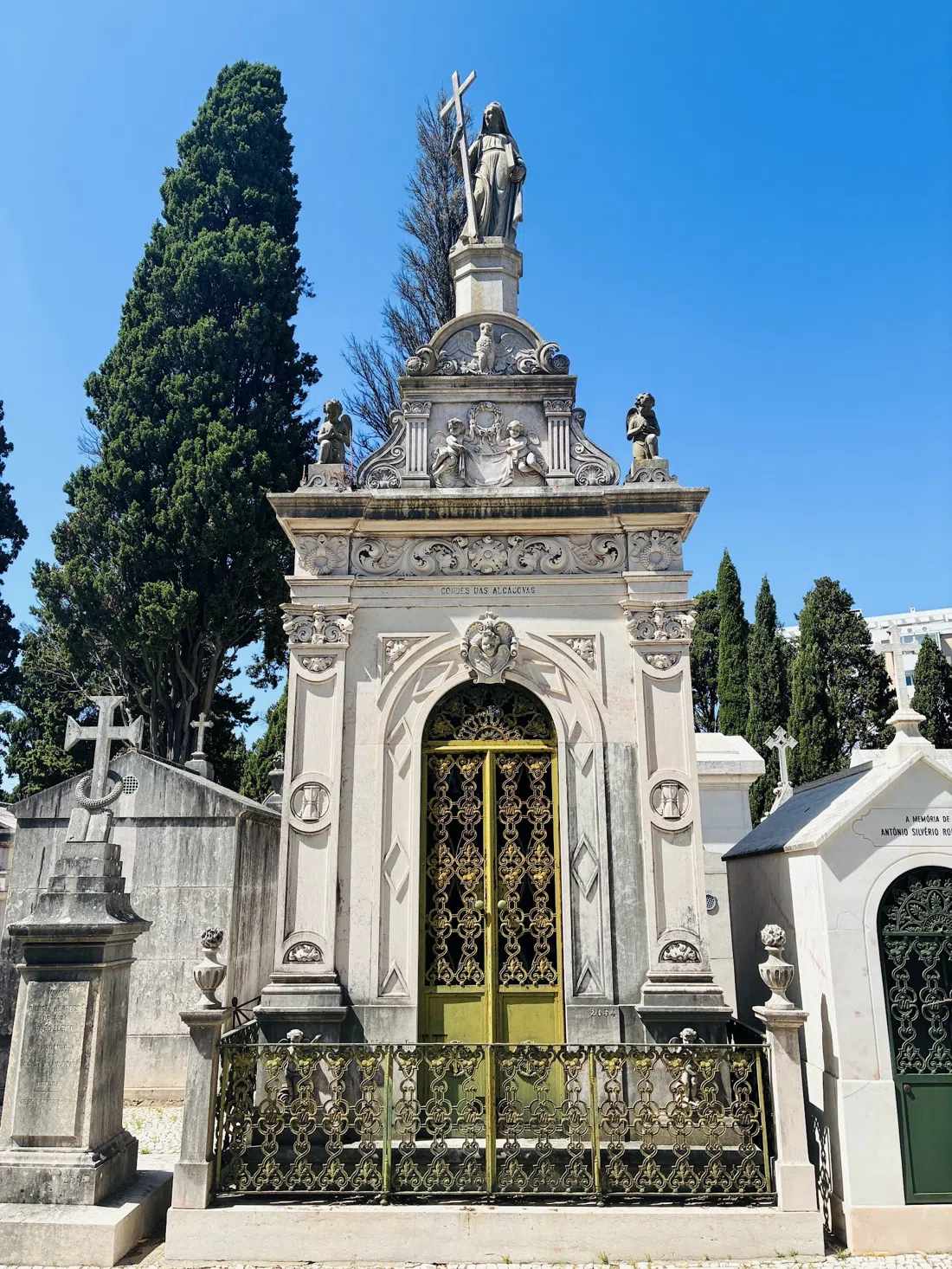
And then the line simply stops. Cemitério dos Prazeres (Campo de Ourique) is the actual terminus of the 28 — not a miradouro, not a church, a cemetery gate, mausoleums and cypress trees where the yellow bones of the tram run out of track. It's open public ground, free, quiet enough that groups should keep their voices down out of basic courtesy to the people visiting graves, but it's worth the walk to the end rather than hopping off at Estrela or Campo de Ourique proper — the closing image is exactly as good as the title promises, and skipping it means never actually finishing the ride you started in Graça.
Riding It Properly
Transport: Buy a Viva Viagem card (€0.50, refundable) and load it with either single trips (€1.85 with the card vs €3 cash on board) or a 24-hour pass (€6.60) if you're planning more than three rides that day — you will want more than three rides. The 28 runs roughly 6am to 11pm; avoid 10am–1pm and again 3pm–5pm if you want a seat rather than a standing spot pressed against the door.
Cash: Carry small notes and coins. A Ginjinha and Feira da Ladra are cash only, and several of the kiosks along the miradouros don't reliably take cards.
Timing: Ride the full Prazeres-to-Martim Moniz stretch once, early — before 9am — purely for the ride, with no stops. Then do the reverse walking the venues above at your own pace over a full day, hopping the tram for the uphill stretches only. Feira da Ladra only exists Tuesdays and Saturdays, so build your day around it if the flea market matters to you.
Budget: A full day covering every venue above — transport, two museum or monument entries, two coffee stops, one sit-down meal at Chapitô or the market, a ginjinha and a pastel de nata — runs roughly €40–60 per person, before whatever you spend at Feira da Ladra.
Where to stay: Graça or Alfama puts you at the start of the line and means every ride downhill is free sightseeing; Campo de Ourique is quieter and cheaper but means starting your day against the crowd. Either way, start with a proper Lisbon hotel search, and if you want the rest of the city beyond this one tram line, the Lisbon guide covers it.