The Lisbon issue
How to Walk Lisbon's Mouraria After Dark
A street-by-street night walk on the most layered hill in Lisbon: a rooftop above a shabby shopping centre, Mozambican ribs, fado in the house that made it, and a gig room that runs to 04:00.

By Tomás BandeiraLisbon after midnight, for groups who don't do quiet
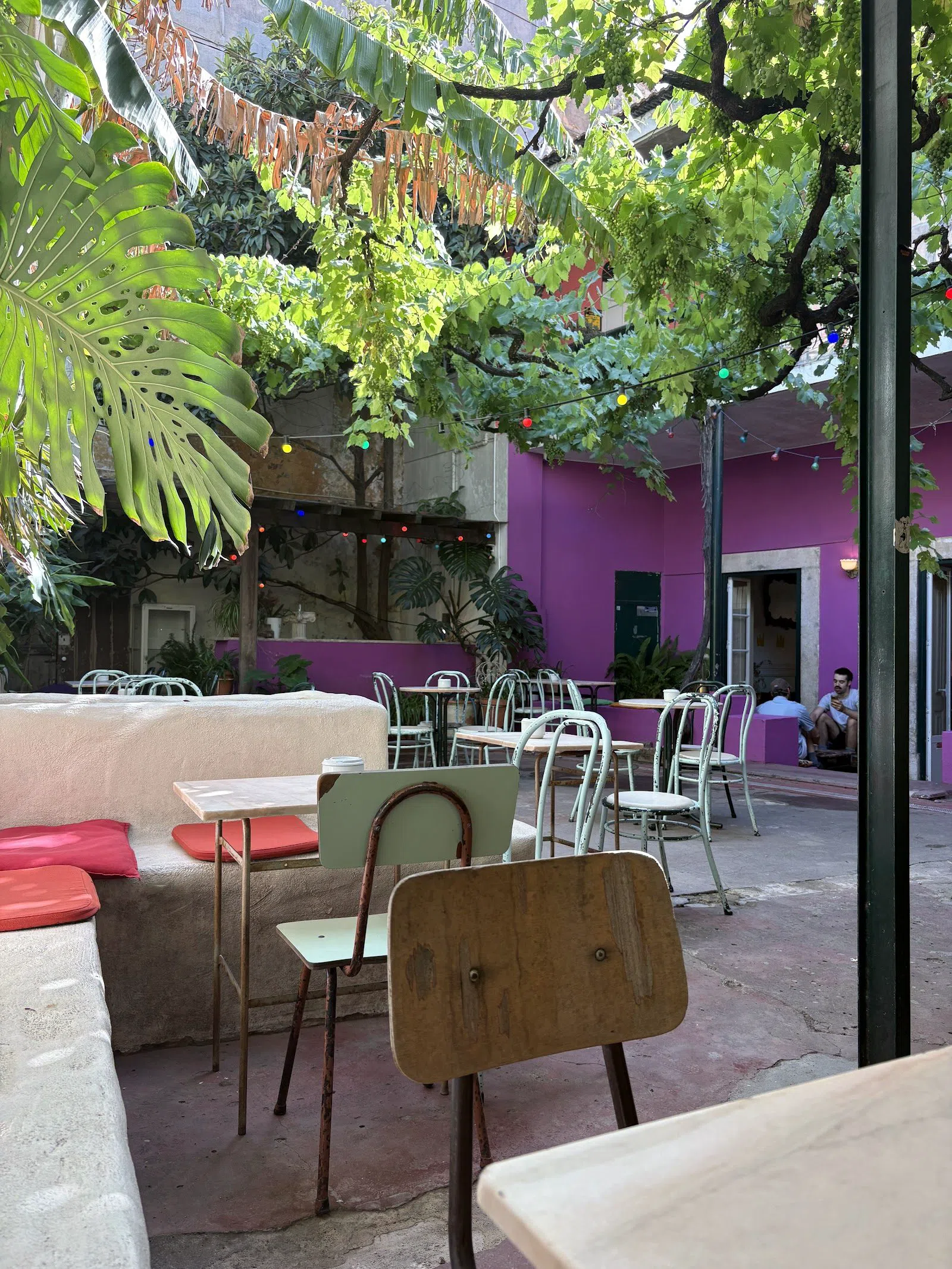
The lift starts in a shopping centre that smells of frying oil and photocopier toner, somewhere between a suitcase stall and a phone-case stall, and ninety seconds later you are holding a gin tonic above the whole hill: tiled roofs, satellite dishes, the castle wall going orange. Nobody puts a sign on the street telling you that is up there. That is Mouraria after dark in one lift ride. Nothing announces itself, and everything worth eating or hearing is one unpromising door away.
This is the quarter the Moorish population was pushed into after 1147, and it never stopped being where Lisbon puts its newcomers. Fado was born on these steps. Today the same three hundred metres give you Mozambican chamuças, hand-pulled noodles, Bangladeshi curry houses on Rua do Benformoso and a neighbourhood kitchen where a different cook takes the stove each night. Walk it in that order and the layers stack up on their own. The closing times below are the ones that will ruin your plan if you ignore them.
Start high, on the wrong side of the square

Topo Martim Moniz (Martim Moniz, top floor of the shopping centre) is the single best vantage point on the neighbourhood, and the route in, a lift through a shabby Chinese-and-Bangladeshi mall, is the whole point of the trip rather than something to apologise for. No door policy, no bookings for drinks. Gin tonics and cocktails run €8-12. On a weeknight a group of eight walks straight in and finds a corner; on Friday and Saturday get up there before the sun goes or you will spend an hour standing with your drink held above your head.
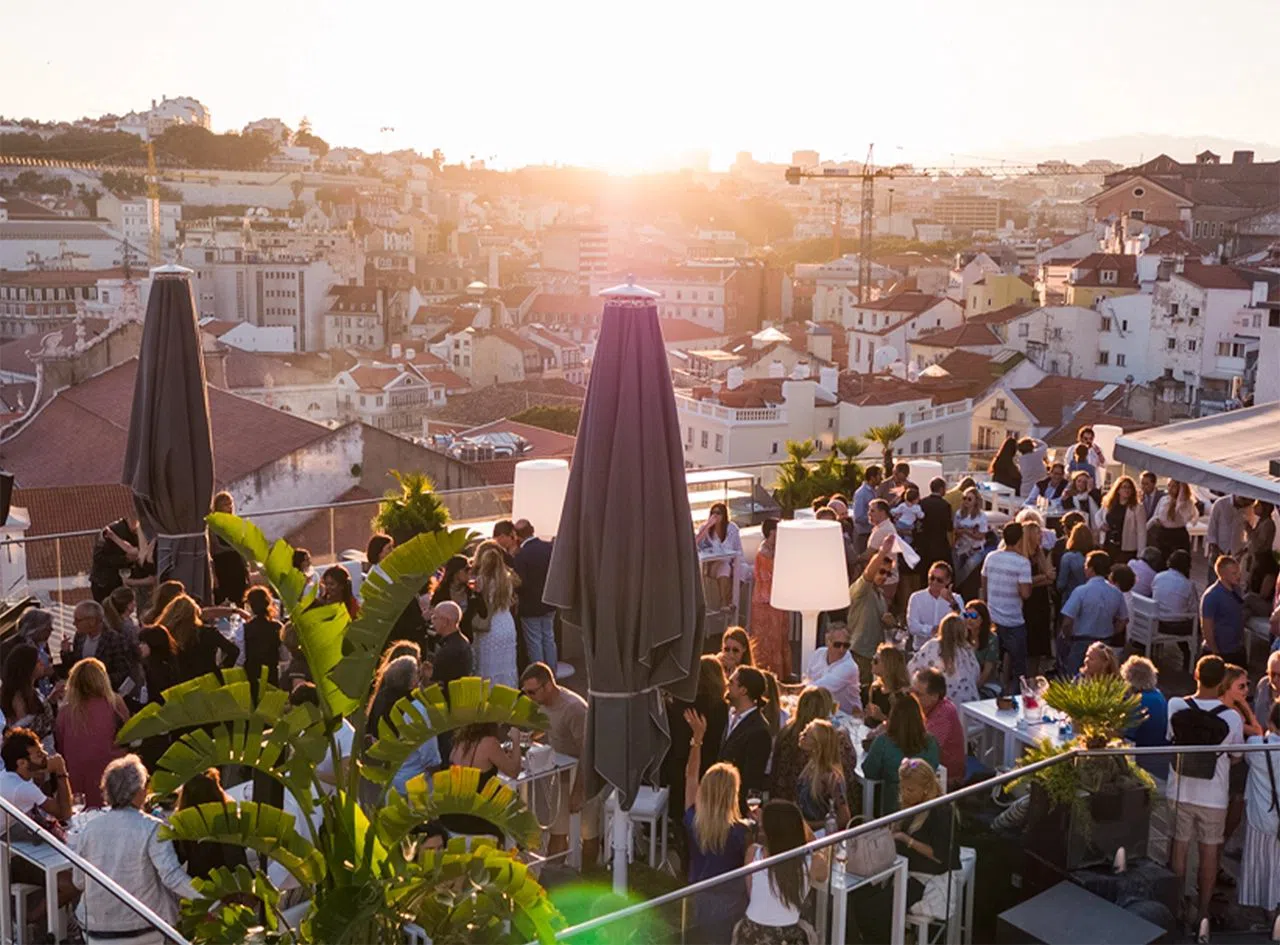
Rooftop Bar Mundial (Praça Martim Moniz, hotel rooftop) is the polished counterpart across the same square. Same view, better chairs, worse story. It takes reservations and you should make one. Cocktails are €12-16, it seats a group comfortably, and there is no hard door beyond smart-casual. It shuts at 23:00 every day of the year, and that decides your running order: do Mundial as the sunset opener, at 19:00 or 20:00, then move to Topo for the later, scruffier half of the evening.
Plan your Lisbon trip
Live prices from our booking partners.
Free cancellation on many rooms. We may earn a commission when you book.
Eat early or the noodles are gone
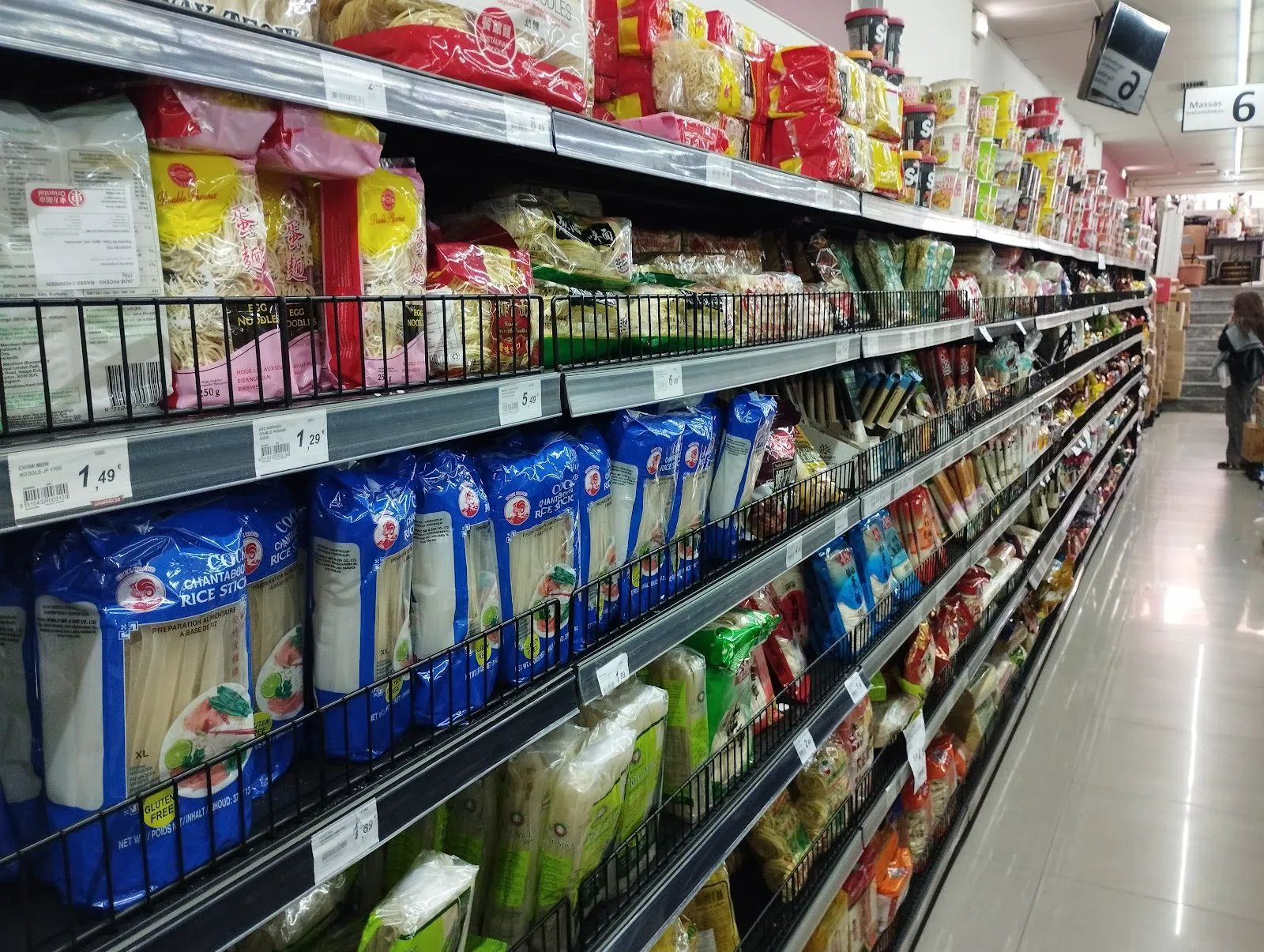
Mercado Oriental Martim Moniz (Martim Moniz) closes at 20:30. Read that again before you build an evening around it. This is the Chinese and East Asian layer of the melting pot, a canteen of communal tables where a group just walks in and claims one, plates are €6-10, and the hand-pulled northern noodles are the reason to be there. Cash only. Treat it as a 19:00 first course rather than dinner.
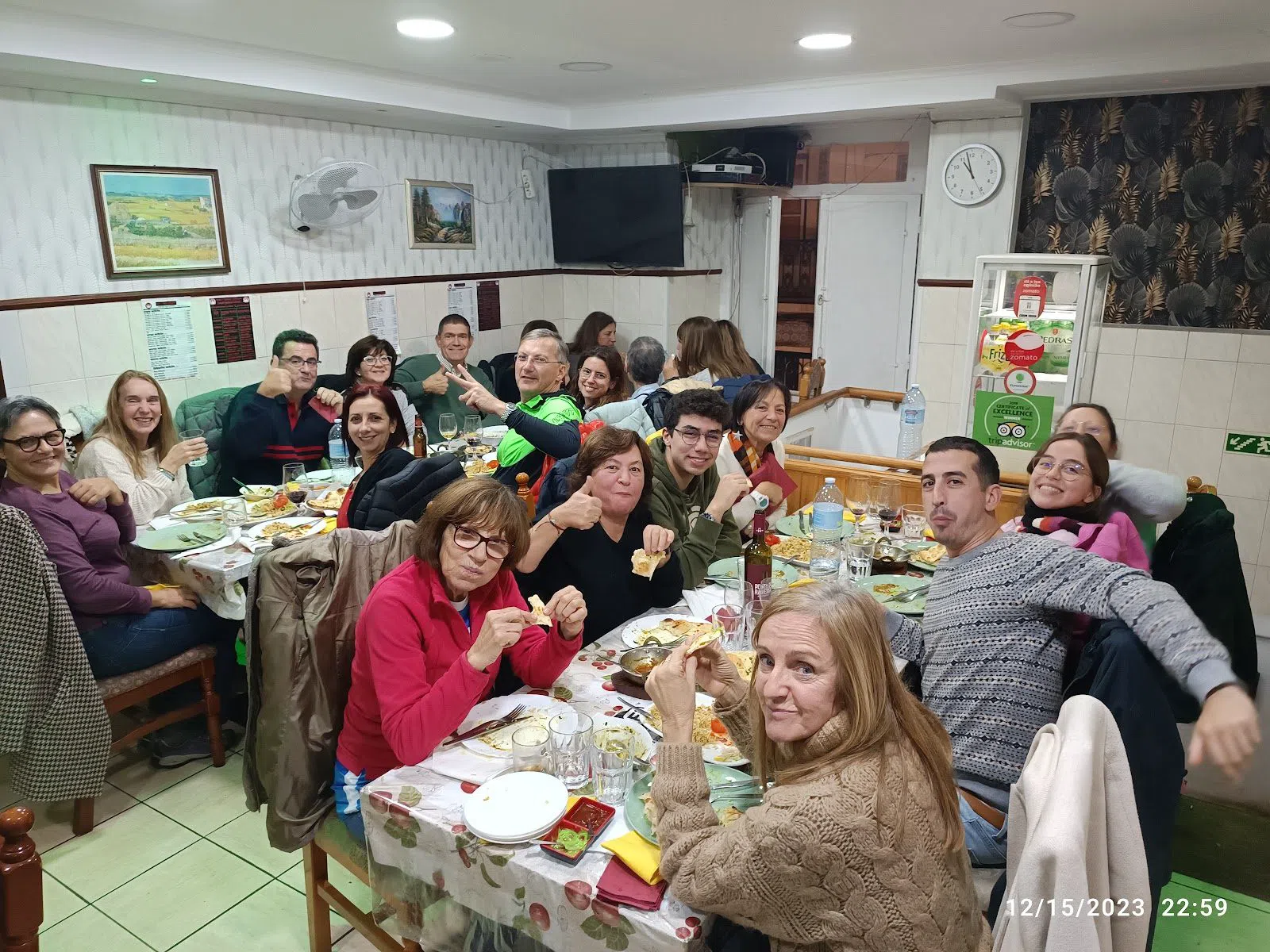
Sonar Bangla (Rua do Benformoso) is the pick of what everyone calls curry street, a narrow lane lit almost entirely by shop windows, and it stays open daily to 23:30 when most of its neighbours have shut the shutters. Walk-in, no reservations, long tables, curries €6-10, the easiest cheap feed for a hungry group on the whole walk. One honest warning: operators and signage on Benformoso change constantly, and this place is also listed as Ghoroa. Check the name on the awning rather than the map pin.
The Mozambican half of Mouraria
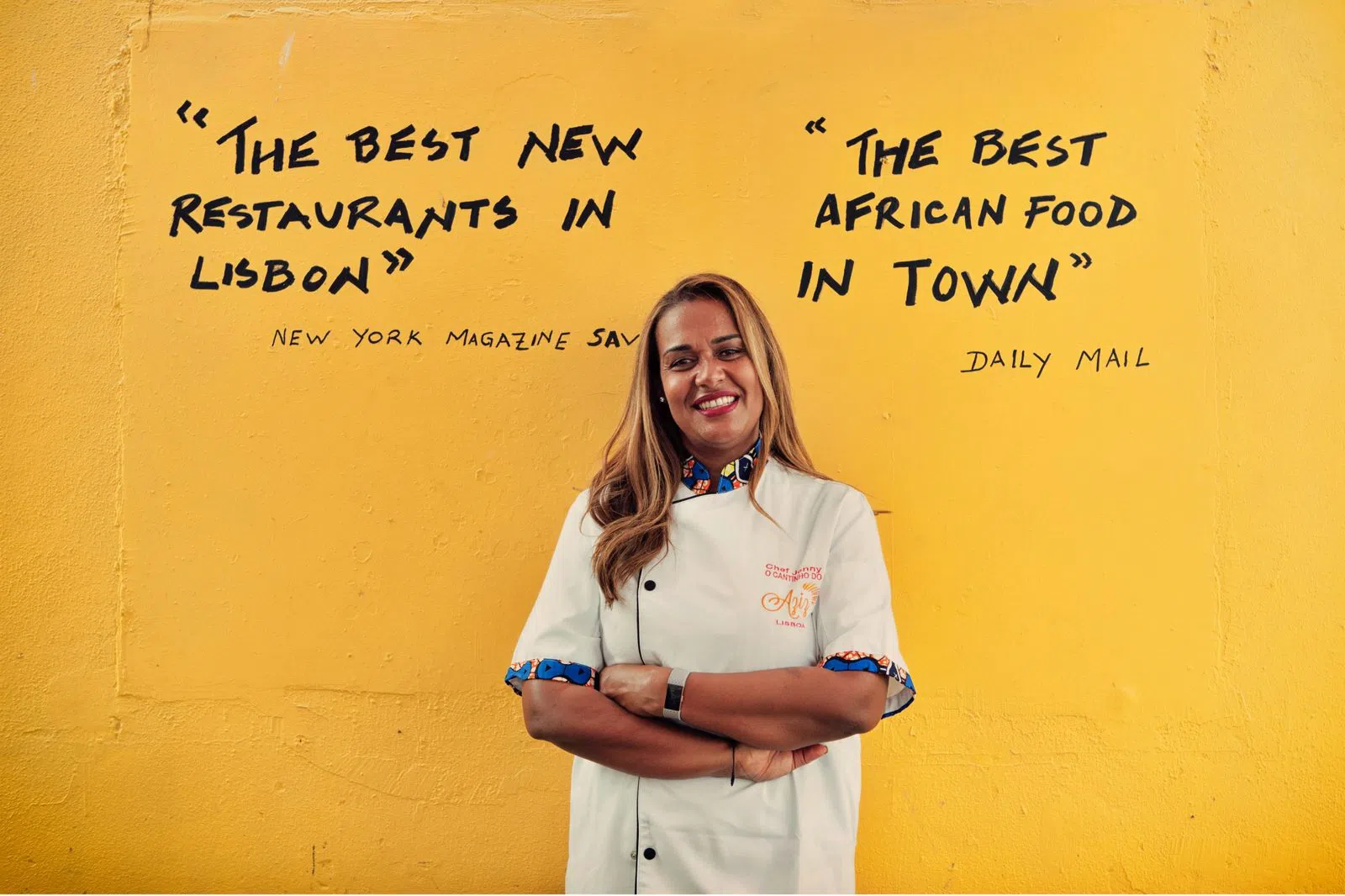
Cantinho do Aziz (Mouraria) has had the same family cooking Mozambican food for thirty-five years and is the clearest expression of the African layer here. The chamuças are the dish people still talk about a year later; mains are €12-18 and the kitchen runs to 23:00. It takes reservations and you want one, because the inside room is genuinely tiny: perfect for two, awkward for six. A group should book the outdoor tables and accept that you will be eating in the street, which is where you want to be anyway. Closed Sundays.
Zambeze (Mouraria) does the same cooking with a terrace that seats around a hundred, which makes it the easiest large-group option in the area by a distance, and it explicitly takes group and event bookings. Mains are €18-28, terrace drinks are cheaper than the food suggests, and it is one of the best-value terraces in central Lisbon. Time it properly. The terrace runs 11:00-23:00, but the dining room shuts between services, so a 17:30 arrival gets you a drink and a shrug rather than dinner.
Tascas and which ones you can actually get into
Zé dos Cornos (Mouraria) is unreconstructed old Mouraria: no reservations, cash only, mains €8-12, and the ribs are the order. The catch that wrecks most people's night is the hours. It serves dinner only Thursday to Saturday, 19:00 to 22:00, and is closed Sundays. With no bookings and a small room, a group of six that turns up at 20:30 is queueing in the lane. Be there the minute the door opens.

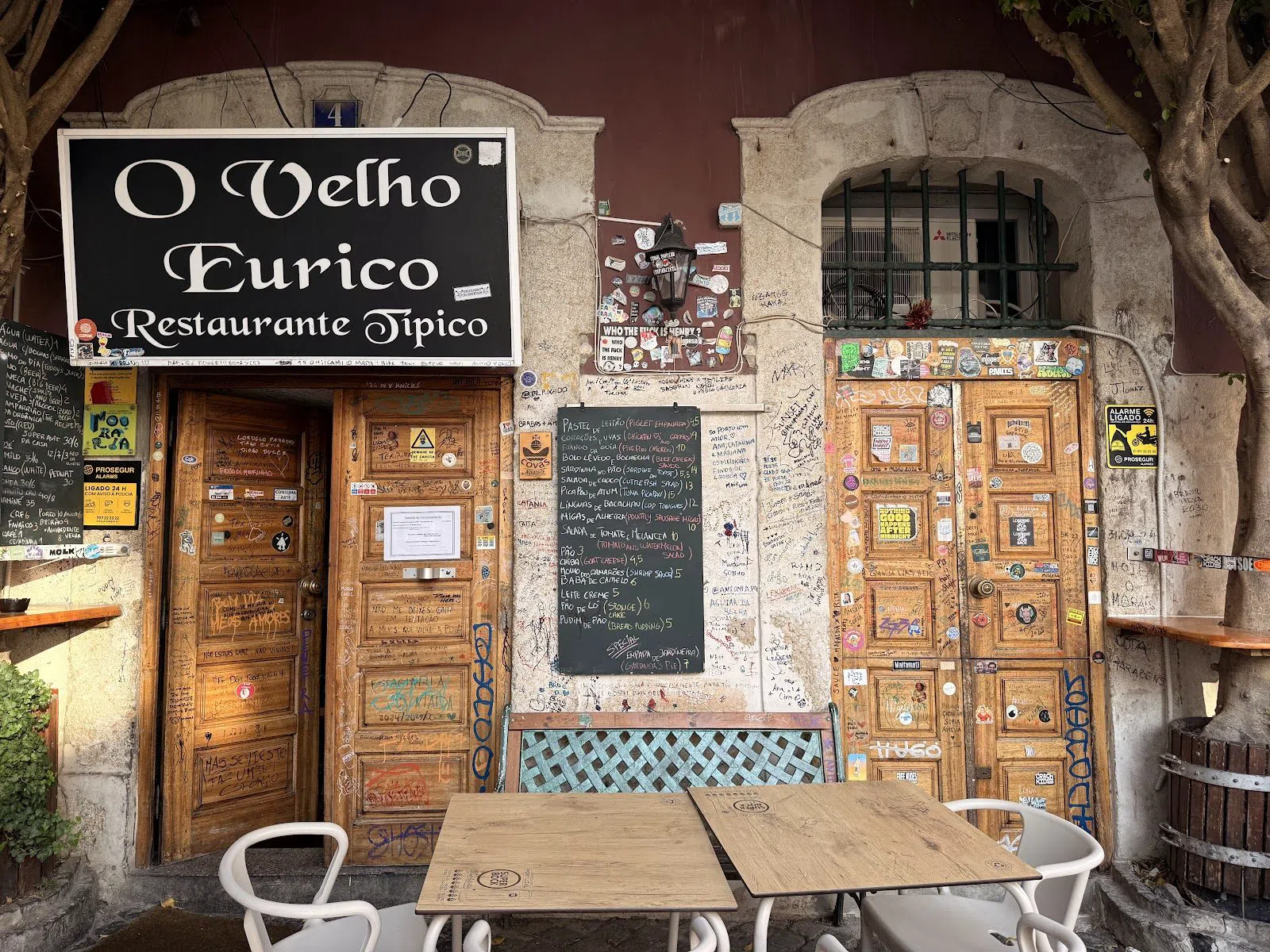
O Velho Eurico (Mouraria) is the most sought-after table on this hill and the best modern take on tasca cooking here. Mains €12-18, dinner 20:00 to 22:30, closed Mondays. Reservations open weeks ahead and go fast, the room is small, and anything over four people is difficult. Book a fortnight out, and do not build your evening around walking in.
The Food Temple (Mouraria, with the overflow on the square steps) is the plant-based pioneer in a district that is otherwise ribs, curry and shellfish, so it is the answer when one person in the group doesn't eat meat and the rest of the walk has nothing for them. Dinner only, 18:30 to 23:30, Tuesday to Sunday. Tapas plates €6-12, tasting menu higher. Reservations recommended; the room is small and in warm weather people simply eat sitting on the steps outside.

Fado in the house that made it
Maria da Mouraria (Largo da Severa) is the only proper fado house in the neighbourhood, and it sits in the house of the woman who arguably invented the form, which makes it the historical anchor of the whole walk. Shows run Tuesday to Sunday, starting around 21:00, on a set menu of roughly €70 per person including dinner and the singing. Bookings are essential and the room is small: reserve well ahead, take a group if you like, and expect to share a table with strangers.
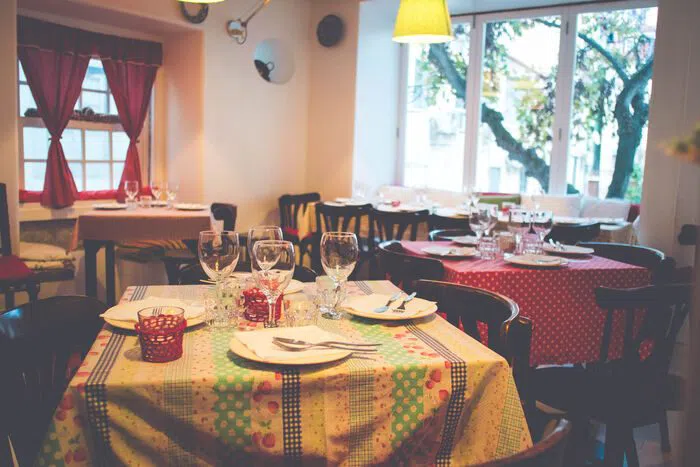
Be clear-eyed about the €70. It buys two hours in that specific room at that specific address, with the lights down and nobody allowed to talk through the singing, and it is no bargain as a dinner. If that is what you want, it is the best money you will spend up here. If you mainly want to eat well, eat elsewhere and accept you are skipping the reason the neighbourhood is famous.
The neighbourhood cooking for itself
Cozinha Popular da Mouraria (Mouraria) is the most literal version of everything this walk is about: a non-profit kitchen where neighbourhood cooks from a dozen countries take turns on the stove, dinners around €10-15, communal by design and genuinely happy to see a group. It runs Tuesday to Saturday, closed Sunday and Monday, and the programme is event-led, so message ahead to find out who is cooking and whether there is a seat. Turning up blind on a quiet Tuesday is how you end up standing outside a dark door.
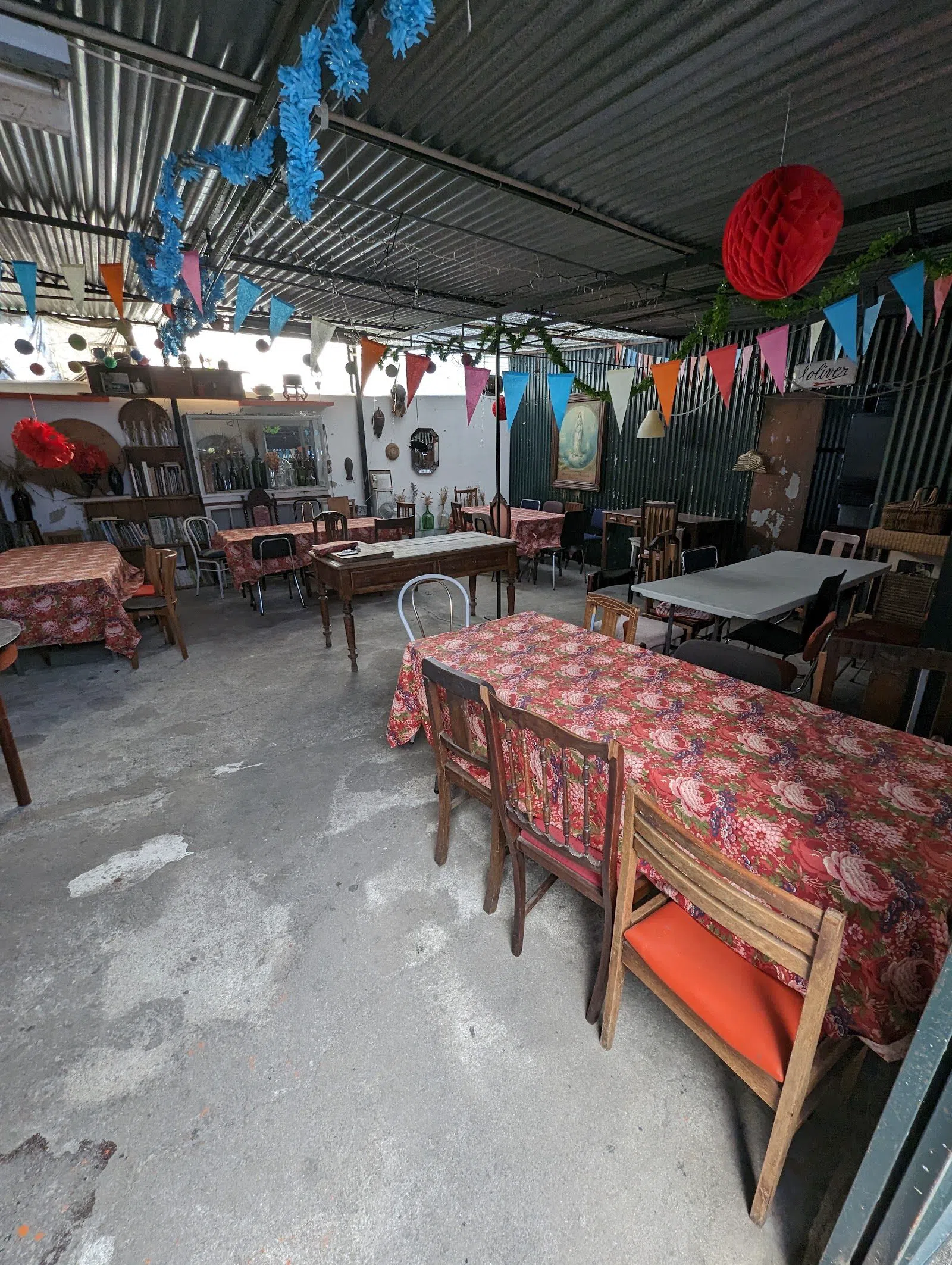
Largo Café Estúdio (Mouraria) is run by a cooperative that ploughs its takings back into the streets around it, which is worth knowing during every gentrification conversation you will have on this hill. Beers €3, snacks €5-9, no door policy, terrace for the overflow. Open to midnight and to 02:00 on Friday and Saturday, closed Mondays. This is the sit-down-and-stay stop.
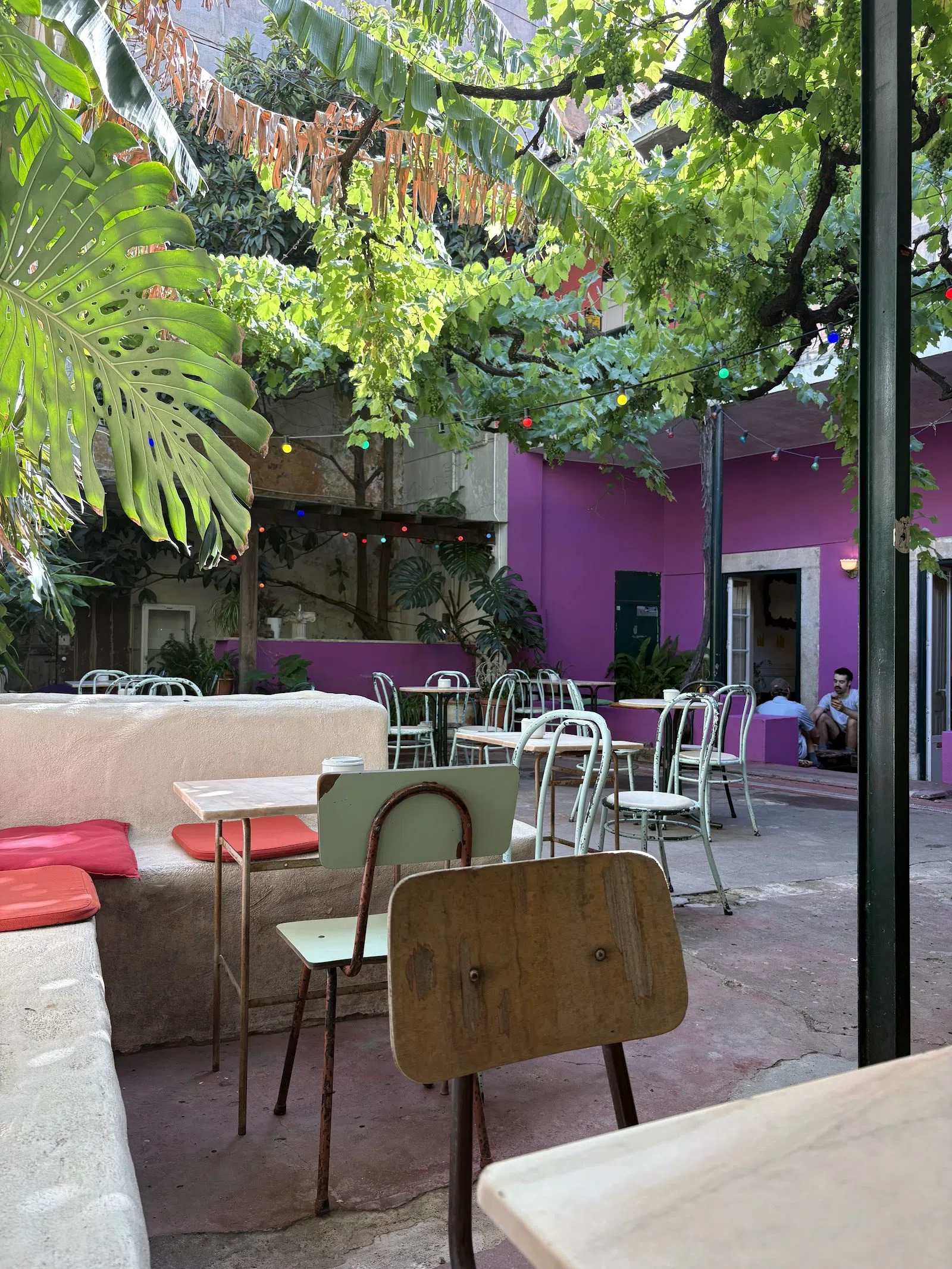
Casa Independente (Largo do Intendente) is what the area is known for after dark: a warren of small rooms and a patio, walk-in, groups fine, beers €3-4, cocktails €8-10, gigs free to €10, though the Tiger Room fills fast on gig nights. The founders have confirmed the project closes for good at the end of December 2026. Check it is still standing before you go, and if it is, go now.
Rooms that swallow a big group
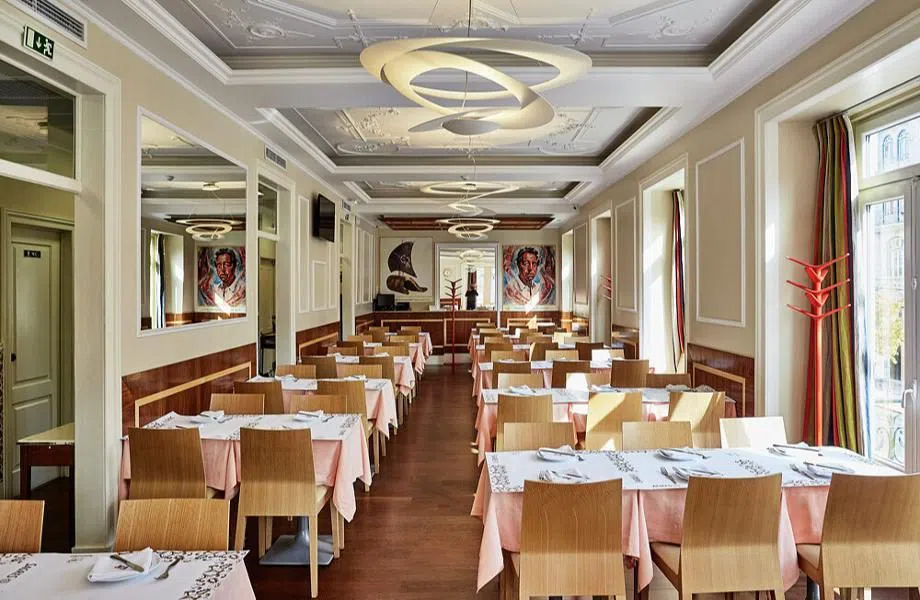
Cervejaria Ramiro (on the Intendente edge of Mouraria) has 150 covers and runs to midnight, which makes it the obvious late anchor when there are ten of you and everywhere else has a six-top limit. Reckon on €35-55 per person with shellfish and beer. Booking is online only, Tuesday to Sunday, closed Monday. No booking means taking a ticket and waiting, perfectly normal here, just don't do it with hungry people at 22:00.
Chapitô à Mesa (up on the castle slope above Mouraria) is run by a circus school that trains young people out of the justice system. Mains are €20-30, bar drinks considerably less, and it opens to 22:30 on weekdays, 23:00 at weekends. Terrace reservations are strongly advised because the tables with the view are few, and a group that walks in cold gets seated where there is nothing to look at.
Where the night actually ends
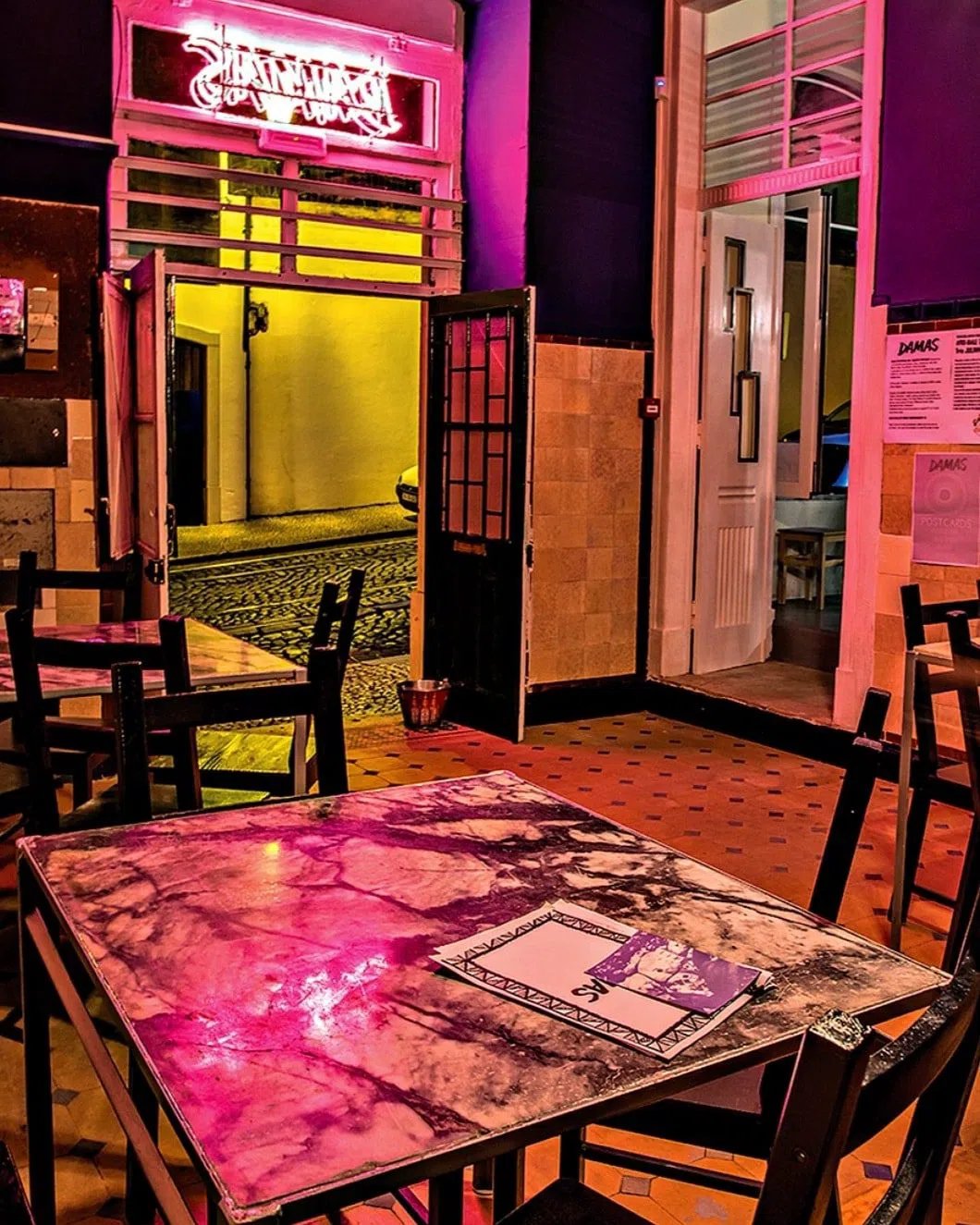
Mouraria itself goes quiet earlier than you expect. For a real late room you cross out of it. Damas (Graça, over the ridge) is a short, steep uphill walk from the top of the neighbourhood and the closest proper live-music bar going. Walk-in, no door policy, drinks €4-8, gigs free to €10, and it runs to 04:00 on Friday and Saturday. Groups are fine at the bar; the gig room is standing and gets tight fast, so if the band matters, get in before the support finishes.
Two routes that work
For two people on a weeknight: Mundial at 19:30 for the view, Cantinho do Aziz inside at 21:00, then Largo Café Estúdio until it shuts. Cheap, quiet, all within five minutes' walk.
For eight or more on a Friday: Mercado Oriental at 19:00 for noodles while it is still open, Topo at 20:00 before the crush, Zambeze's terrace at 21:00 because it is the only place that will take you all without a fight, then Damas. If you would rather eat properly, swap Zambeze for a booked table at Ramiro and finish there. Stay anywhere on this side of the hill and the whole route is walkable at the end of the night. See the Lisbon hotel search for beds around Martim Moniz and Intendente, and the Lisbon guide for what to do with the daylight hours either side.
Practical notes for the walk
Martim Moniz is on the metro's green line and the square is the start of the 28 tram, so you can arrive from almost anywhere in the city without a taxi. Everything above except Damas and Chapitô sits within about a ten-minute walk of that square. Both exceptions are uphill, and the streets are steep and cobbled, so wear something you can climb in.
Bring cash. Mercado Oriental and Zé dos Cornos are cash only, and small places on Benformoso can be too. There are Multibanco machines around Martim Moniz; there are not many once you are into the lanes.
Timing decides whether your night works. Mercado Oriental shuts at 20:30, Mundial and Zambeze at 23:00, Cantinho do Aziz's kitchen at 23:00, Sonar Bangla at 23:30, and Zé dos Cornos stops serving at 22:00, Thursday to Saturday only. Mondays are thin: O Velho Eurico, Largo Café Estúdio and Ramiro are all closed. Sunday kills Cantinho do Aziz, Zé dos Cornos and Cozinha Popular. Eat before 22:00 and treat the bars as the second half.
On budget, a genuinely good night of noodles, curry and beers comes in at €25-35 a head. Sit down at Zambeze or Chapitô with wine and it is €45-60. Add the fado set menu at Maria da Mouraria and you are at €90-plus per person for the evening. All three versions are honest; just pick one before you set off rather than drifting upwards at every door.
Booking, in one line: book O Velho Eurico weeks out, Maria da Mouraria and Ramiro well ahead, Chapitô's terrace and Cantinho do Aziz's outdoor tables a day or two ahead, and message Cozinha Popular to see what is on. Everything else you walk into.
Before you go
Is Mouraria worth visiting at night, or is it a daytime neighbourhood?
Night is when it makes sense. The rooftops above Martim Moniz, the Mozambican kitchens, the Benformoso curry houses and the only fado house in the area all run in the evening. The catch is that it winds down earlier than you expect: most kitchens stop between 22:00 and 23:30, and for a genuinely late room you walk uphill to Damas in Graça, which runs to 04:00 on Friday and Saturday.
Which places do I actually need to book?
O Velho Eurico takes reservations weeks ahead and is hard to get, so book a fortnight out or skip it. Maria da Mouraria needs booking for the fado dinner, and Cervejaria Ramiro is online booking only. Chapitô à Mesa's terrace and Cantinho do Aziz's outdoor tables are worth a day or two's notice. Topo Martim Moniz, Sonar Bangla, Zé dos Cornos, Mercado Oriental, Largo Café Estúdio, Casa Independente and Damas are all walk-in.
Where can I take a group of eight or more?
Zambeze is the easiest: its terrace seats around 100 and it explicitly takes group and event bookings. Cervejaria Ramiro has 150 covers and absorbs a big table if you book online. Sonar Bangla's long tables and Mercado Oriental's canteen seating work for a hungry crowd on no notice. Avoid O Velho Eurico and the inside room at Cantinho do Aziz with more than four people.
How much does a night in Mouraria cost?
Noodles, curry and beers comes to about €25-35 per person. A sit-down dinner at Zambeze or Chapitô à Mesa with wine runs €45-60. The fado set menu at Maria da Mouraria is around €70 per person including dinner and the show, which pushes the whole evening past €90. Rooftop cocktails are €8-12 at Topo and €12-16 at Rooftop Bar Mundial.
Do I need cash, and are there card problems?
Bring cash. Mercado Oriental Martim Moniz and Zé dos Cornos are cash only, and some of the small operators on Rua do Benformoso are too. Multibanco machines cluster around Praça Martim Moniz and thin out fast once you are into the lanes, so draw money before you start walking.